Hey, T.H. here. I built ThrillerRanked out of Texas because I got tired of ranking articles that read like they were written by a spreadsheet. This list is me talking to y’all like I’d talk at a bookstore.
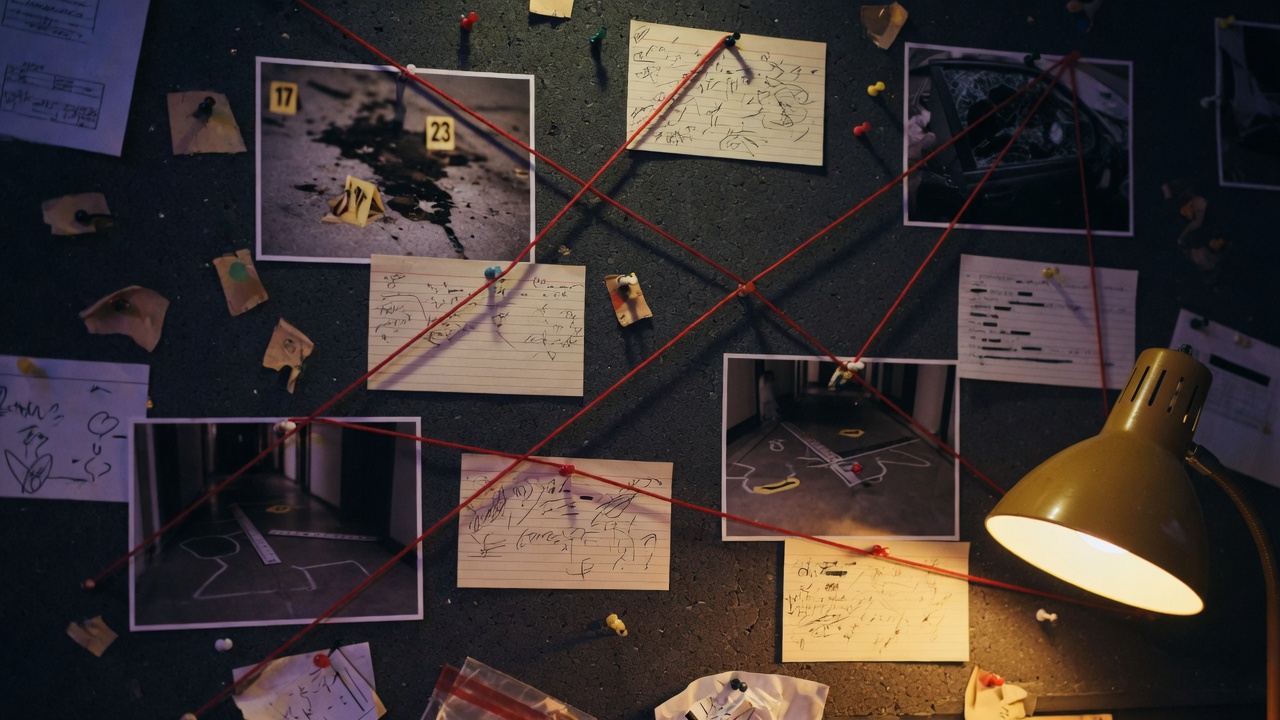
The crime scene tape, the chain of custody, the overtime shift that becomes a second home, police procedurals turn investigation into narrative architecture. Unlike lone-wolf detective fiction, the subgenre emphasizes teams, institutions, and the friction between what procedure demands and what justice requires. Detectives argue over warrants, forensics delays case momentum, internal affairs shadows every interview, and the clock keeps running whether the squad is ready or not.
This is our ranked list of the 10 best police procedural books. The novels that defined realistic investigation fiction, still anchor reader recommendations, and represent distinct national traditions from Dublin to Moscow to rural Australia. Every entry below is spoiler-free. Use the comparison table rendered from our frontmatter for procedural depth and series-start decisions, then read on for why these ten lead our methodology, how to match a title to your mood, and where to go next across ThrillerRanked.
Our top three at a glance:
- Tana French’s In the Woods: the literary squad-room novel that redefined modern police procedural ambition.
- Michael Connelly’s The Black Echo, and Harry Bosch’s debut and the foundation of contemporary American procedure.
- Louise Penny’s Still Life; Chief Inspector Gamache’s humane village investigation and series launch.
Read on for the full ranked context, a decision guide, series reading order tables, honorable mentions, and links to our police procedural subgenre hub.
A Brief History of Police Procedural Fiction
Police procedurals didn’t begin with television, though Hill Street Blues, Law & Order, and The Wire certainly amplified the form. Literary roots reach back to Maj Sjöwall and Per Wahlöö’s Martin Beck series (1965–1975), which treated Swedish police work as social documentation, exhausted detectives, bureaucratic friction, and crimes that exposed welfare-state contradictions. Ed McBain’s 87th Precinct novels (1956 onward) gave American readers the squad-room ensemble template: rotating perspectives, precinct geography, and cases that felt like shift work rather than superhero fantasy.
The 1980s and 1990s expanded the international map. Martin Cruz Smith’s Gorky Park (1981) proved procedurals could function as Cold War institutional thrillers. Michael Connelly’s Harry Bosch arrived in 1992 with The Black Echo, importing jazz-soaked Los Angeles realism and Vietnam-haunted moral weight. Nordic noir. Which we cover in depth on our best Nordic noir books ranking: absorbed and exported procedural DNA through Henning Mankell’s Kurt Wallander and the post-Millennium Scandinavian wave.
The 2000s brought literary ambition to the foreground. Tana French’s Dublin Murder Squad reframed procedure as psychological excavation. Louise Penny’s Armand Gamache novels demonstrated that procedurals could carry warmth without sacrificing fair-play mystery. Attica Locke’s Highway 59 series and Jane Harper’s Australian investigations pushed the subgenre toward urgent contemporary social commentary. Richard Osman’s Thursday Murder Club (2020) proved procedurals could also deliver ensemble comedy, and amateur investigators respecting official channels while outflanking them.
Today’s police procedural isn’t a single tone. It encompasses grim institutional realism, cozy village investigation, geopolitical suspense, and geriatric cold-case wit. What unifies the subgenre is respect for process; The idea that how a case is worked matters as much as whodunit.
What Makes a Great Police Procedural?
Before diving into individual titles, it helps to understand what separates exceptional police procedurals from generic cop stories.
Procedure must drive plot, not decorate it. The best novels, French’s In the Woods, Connelly’s The Black Echo, Locke’s Bluebird, Bluebird. Make warrants, chain of custody, jurisdictional disputes, and interview strategy consequential. Readers understand why the detective can’t simply kick down the door, and that constraint generates suspense.
Institutional pressure creates claustrophobia. Internal affairs, political interference, media scrutiny, and departmental politics aren’t subplots: they’re antagonists. Gorky Park’s KGB, Bosch’s compromised LAPD, Locke’s racially fraught Texas Ranger jurisdiction: the system shapes every investigative decision.
The investigator carries cumulative damage. French’s Rob Ryan can’t escape his missing-person trauma. Connelly’s Bosch can’t forgive institutional betrayal. Penny’s Gamache absorbs village grief without becoming sentimental. Procedural detectives are professions where the job rewires the person performing it.
Teams matter. Even novels centered on a single lead detective, and Gamache, Bosch, French’s rotating squad leads; Depend on partners, forensic analysts, and superiors who enable or obstruct progress. The Thursday Murder Club literalizes this by pairing retirees with working detectives.
We scored each book using our v1.0 methodology with adjusted weights for investigative craft and lasting influence. Full transparency: affiliate Amazon links in our ranked entries don’t affect placement.
The Ranked List: Why These Ten Lead
1. In the Woods, Tana French
French’s 2007 debut sits at #1 because it accomplished what literary crime fiction had rarely achieved at scale: it made police psychology and institutional realism feel inseparable from thriller momentum. Detective Rob Ryan investigates a child murder in Knocknaree woods. The same forest where he survived a childhood disappearance that cost him his memory and his friendship. The squad-room dynamics are authentic; the personal entanglement is catastrophic.
In the Woods influenced an entire generation of literary procedurals that refuse to choose between character depth and investigative detail. Pacing is deliberate by modern standards, and the resolution’s ambiguity divides readers: but that ambiguity is thematic, not careless. For understanding what contemporary police procedurals aspire to, start here.
2. The Black Echo, and Michael Connelly
Connelly’s first Harry Bosch novel established the template for modern American police procedurals: the detective who trusts the job more than the institution, the case that opens into conspiracy, and the city; Los Angeles, as moral weather. Bosch investigates the death of a fellow Vietnam tunnel rat and discovers a bank-heist network that may include his own department.
I’d put this at #2 on influence and craft balance. The Black Echo is fast-moving without sacrificing the investigative steps that make Bosch’s conclusions earned. It also launches a series that spans decades and intersects with Connelly’s Lincoln Lawyer universe. For LAPD continuity, this is the essential foundation.
3. Still Life. Louise Penny
Chief Inspector Armand Gamache arrives in the Quebec village of Three Pines to investigate an artist’s death that initially appears accidental. Penny’s debut is gentler than French or Connelly: village warmth, culinary atmosphere, and a community readers want to revisit, and but the fair-play mystery structure and Gamache’s interrogation craft are genuinely procedural.
Still Life ranks #3 as the best humane gateway to long-form police procedural series reading. It demonstrates that the subgenre doesn’t require relentless grimness to deliver investigative satisfaction. Readers who find Bosch too cynical often find Gamache restorative without feeling naive.
4. Gorky Park; Martin Cruz Smith
Moscow homicide investigator Arkady Renko finds three corpses in Gorky Park, stripped of identification and professionally murdered. The KGB wants the case closed; Renko wants the truth. Smith’s 1981 novel proved procedurals could carry geopolitical stakes, bureaucracy as thriller architecture, state power as obstacle, and a detective whose integrity is his only remaining weapon.
Historical Cold War specifics date some passages, but the institutional procedural template remains timeless. Gorky Park launched the Arkady Renko series across decades and influenced international crime fiction’s respect for jurisdictional constraint. For readers who want procedure outside American and British defaults, this is required reading.
5. Bluebird, Bluebird. Attica Locke
Texas Ranger Darren Mathews investigates a murder in rural Lark, Texas: a case tangled with the Aryan Brotherhood, drug routes, and the racial violence East Texas encodes in its geography. Locke’s 2017 novel is among the most urgent contemporary American procedurals: every interview carries historical weight, and jurisdiction is never neutral.
I’d put this at #5 because it represents where the subgenre’s social critique has moved in the twenty-first century, and procedure as politics, policing as identity, and investigation as confrontation with communities that prefer silence. Pair with our criminal thriller coverage for more investigation-forward current picks.
6. The Cuckoo’s Calling; Robert Galbraith
Private detective Cormoran Strike and his resourceful partner Robin Ellacott reinvestigate the death of supermodel Lula Landry, rejected as suicide by Scotland Yard. Galbraith’s debut delivers classic British investigation craft, witness interviews, forensic timelines, and partnership dynamics that deepen across the series.
Slightly lower on our list than French or Connelly because Strike operates outside official police channels, placing the novel at the procedural-detective-fiction border. But investigation methodology is meticulous and fair-play reveals reward attentive readers. An excellent gateway for British crime fiction newcomers.
7. The Dry. Jane Harper
Federal Agent Aaron Falk returns to drought-devastated rural Australia for a funeral and stays to investigate whether his friend’s murder-suicide was staged. Harper compresses climate catastrophe, small-town loyalty, and investigative persistence into a standalone procedural that feels both fast-moving and intimate.
The Dry ranks #7 on atmosphere and accessibility: the drought isn’t backdrop but antagonist, drying up alibis and community trust along with the land. A strong standalone for readers who want procedural structure without series commitment, though Falk returns in Force of Nature.
8. The Secret Place, and Tana French
Detective Stephen Moran partners with cold-case specialist Antoinette Madden to infiltrate St. Kilda’s, an elite Dublin girls’ boarding school, and reopen a murder case frozen by adolescent loyalty and institutional silence. French’s fifth Dublin Murder Squad novel is her most claustrophobic; A single-location investigation where social hierarchy weaponizes procedure itself.
Ranked below In the Woods because series-context accessibility is lower, Moran appeared in Faithful Place, and French’s rotating-lead structure rewards prior exposure. But as a closed-environment procedural, few novels match its pressure-cooker architecture. Book clubs seeking fair-play reveals with psychological depth should prioritize it after one prior French title.
9. The Poet. Michael Connelly
Crime reporter Jack McEvoy investigates his detective brother’s apparent suicide and uncovers a serial killer staging police deaths as self-inflicted. Connelly’s 1996 standalone demonstrates investigative craft from the journalist’s side of the crime tape: a predator who understands police culture well enough to hide inside it.
The Poet trades Bosch-series continuity for set-piece propulsion and remains Connelly’s most acclaimed standalone among thriller readers. Graphic content is serious; approach with appropriate content-warning awareness. For serial-killer architecture built on institutional knowledge, this is peak craft.
10. The Thursday Murder Club, and Richard Osman
Four retirees in a Kent village; Including a former MI5 agent, investigate cold cases weekly until a fresh murder forces collaboration with official detectives who underestimate them. Osman’s 2020 debut became a global phenomenon by proving procedurals could carry warmth, humor, and geriatric charm without abandoning investigative structure.
I’d put this at #10 because lighter stakes and comedic tone make it less representative of the subgenre’s grim core. But as a gateway for readers intimidated by French’s ambiguity or Connelly’s corruption, it’s invaluable. The ensemble cast sustains a series that has sold millions worldwide.
Series Reading Order Guide
Police procedural series reward continuity. Use these tables to plan your reading path: publication order is listed unless noted otherwise.
Dublin Murder Squad, and Tana French
| Order | Title | Lead Detective | Notes |
|---|---|---|---|
| 1 | In the Woods | Rob Ryan | Worth your time: series foundation |
| 2 | The Likeness | Cassie Maddox | Direct sequel energy to #1 |
| 3 | Faithful Place | Frank Mackey | Backstory-rich standalone entry |
| 4 | Broken Harbor | Mick Kennedy | Economic-collapse atmosphere |
| 5 | The Secret Place | Stephen Moran | Boarding-school claustrophobia |
| 6 | The Trespasser | Antoinette Conway | Partnership under internal pressure |
| 7 | The Witch Elm | Toby Hennessy | Standalone-adjacent pivot |
| 8 | The Searcher | Cal Hooper | Rural Ireland, retired Chicago cop |
Each novel can be read independently, but publication order preserves squad-world texture and character callbacks.
Harry Bosch; Michael Connelly
| Order | Title | Notes |
|---|---|---|
| 1 | The Black Echo | Definitive series launch |
| 2 | The Black Ice | Continues conspiracy momentum |
| 3 | The Concrete Blonde | Serial-killer escalation |
| … | (continue chronologically) | See Connelly’s official reading guides |
| , | The Poet | Standalone Jack McEvoy; Bosch cameo |
| . | The Narrows | McEvoy sequel |
New readers should start with The Black Echo. Crossover titles with Mickey Haller (The Brass Verdict, The Reversal) enrich but aren’t required early.
Chief Inspector Gamache: Louise Penny
| Order | Title | Setting |
|---|---|---|
| 1 | Still Life | Three Pines foundation |
| 2 | Dead Cold (A Fatal Grace) | Winter village mystery |
| 3 | The Cruelest Month | Continuing village ensemble |
| … | (continue chronologically) | Long-running character arcs |
Publication order is strongly recommended, and Gamache’s emotional arc and village relationships compound beautifully.
Highway 59; Attica Locke
| Order | Title |
|---|---|
| 1 | Bluebird, Bluebird |
| 2 | Heaven, My Home |
| 3 | Razorblade Tears |
Darren Mathews’s arc across East Texas justice is best read sequentially.
Cormoran Strike, Robert Galbraith
| Order | Title |
|---|---|
| 1 | The Cuckoo’s Calling |
| 2 | The Silkworm |
| 3 | Career of Evil |
| 4 | Lethal White |
| 5 | Troubled Blood |
| 6 | The Ink Black Heart |
| 7 | The Running Grave |
Strike and Robin’s partnership deepens significantly across the series. Start at book one.
How to Choose Your Next Police Procedural
Use this decision path to match mood and experience level:
If you want literary depth and psychological realism: In the Woods → The Secret Place → Bluebird, Bluebird.
If you want classic American LAPD grit: The Black Echo → The Poet for standalone propulsion.
If you want warmth and community: Still Life → The Thursday Murder Club.
If you want international institutional suspense: Gorky Park → Nordic noir procedurals.
If you want atmospheric standalone propulsion: The Dry: drought-driven rural investigation.
If you want British fair-play investigation: The Cuckoo’s Calling, and Strike and Robin partnership launch.
| If you want… | Start here | Then try… |
|---|---|---|
| Literary squad craft | In the Woods | The Secret Place |
| American institutional grit | The Black Echo | The Poet |
| Humane village mystery | Still Life | The Thursday Murder Club |
| Social-procedural urgency | Bluebird, Bluebird | Criminal thrillers 2026 |
| Atmospheric standalone | The Dry | Gorky Park |
| British PI investigation | The Cuckoo’s Calling | In the Woods |
Honorable Mentions
These excellent police procedurals fell just outside our top ten; Usually on cross-genre classification, series-dependency, or slightly lower consensus scores, but each belongs on an expanded TBR.
Faceless Killers. Henning Mankell. Kurt Wallander’s debut and Nordic procedural template. Foundational; see our Nordic noir ranking for full context.
The Laughing Policeman: Maj Sjöwall and Per Wahlöö. Martin Beck series peak and genre origin point. Historical importance exceeds gateway accessibility for casual readers.
Cop Hater, and Ed McBain. First 87th Precinct novel; Squad-room ensemble DNA for everything that followed.
Faithful Place, Tana French. Frank Mackey’s family-backstory procedural. Worth your time: for The Secret Place fans.
The Wrong Side of Goodbye. Michael Connelly. Late-period Bosch excellence. Read after The Black Echo foundation.
Force of Nature: Jane Harper. Aaron Falk sequel to The Dry. Strong wilderness procedural follow-up.
Police Procedural vs. Detective Fiction: Where the Lines Blur
Several titles on this list also function as detective fiction, and and that overlap is a feature, not a bug. Cormoran Strike operates as a private investigator. The Thursday Murder Club’s retirees are amateur sleuths collaborating with police. French’s detectives sometimes bend rules in ways that test procedural purity. What distinguishes police procedurals is institutional framing: the investigation is shaped by badges, jurisdiction, and departmental consequence.
If your appetite extends beyond squad-room fiction, explore our Top Criminal Thriller Books of 2026 for legal, procedural, and investigation-forward picks from the current year. For Scandinavian social-critique procedurals, our best Nordic noir books hub covers Mankell, Larsson, Nesbø, and the international wave. For courtroom architecture that complements police investigation, browse our legal thriller rankings.
Browse additional titles by tag on our dedicated police procedural subgenre page.
Content Warnings and Reader Sensitivities
Collectively, these ten novels feature murder, child victims, racial violence, white supremacy, suicide, war trauma, institutional corruption, and graphic crime scenes. In the Woods and The Secret Place center teen and child deaths. Bluebird, Bluebird confronts racism and the Aryan Brotherhood directly. The Poet includes disturbing serial-killer staging and graphic violence. The Dry addresses suicide and drought-driven despair.
Always check individual content warnings in our ranked entries before gifting or assigning to groups. Most titles here are firmly adult-oriented; The Thursday Murder Club is the notable exception for gentler tone.
Related Rankings on ThrillerRanked
Dig deeper by subgenre, year, and theme:
- Police Procedural subgenre hub; Explore by trope and mood
- Top Criminal Thriller Books of 2026, procedural and investigation-forward titles
- Best Nordic Noir Books. Scandinavian squad-room bleakness
- Best Legal Thriller Books: courtroom suspense complement
- How We Rank, and full methodology transparency
Conclusion
The best police procedural books prove that realistic investigation can be as gripping as any chase; That a warrant delay can feel like a cliffhanger, and a partner’s dissent can detonate the narrative. Tana French and Michael Connelly built the modern literary and American templates. Martin Cruz Smith expanded the international map. Louise Penny and Richard Osman demonstrated the subgenre’s tonal range from village humanity to geriatric wit. Attica Locke and Jane Harper push contemporary procedure toward urgent social truth.
Use the comparison table for procedural depth and series-start decisions, match your mood to our decision guide, and grab copies via the Amazon links in each ranked entry. Whether you start with French’s psychological excavation or Connelly’s LAPD foundation, you’re reading the novels that made police work a pillar of thriller fiction.
Which police procedural are you picking up first? Contact us if we missed a title that deserves consideration in a future update.
This article was researched using aggregated public data from Goodreads, Kirkus Reviews, Publishers Weekly, CrimeReads, and Edgar Awards coverage as of July 3, 2026. Rankings reflect our published methodology and editorial synthesis, not pay-to-play placement.