I’m T.H., founder of ThrillerRanked, writing from Texas. Y’all deserve recommendations that sound like somebody who actually reads this stuff, not a copy-paste list. Here’s my honest take.
Long winters, low population density, and welfare states that promise equality while concealing cruelty, Nordic noir didn’t emerge from nowhere. Scandinavian crime fiction spent decades building toward an international explosion: Henning Mankell’s exhausted Kurt Wallander trudging through Skåne rain, Arnaldur Indriðason’s Reykjavík detectives carrying generational grief, Peter Høeg’s Smilla reading snow like scripture. Then Stieg Larsson’s The Girl with the Dragon Tattoo turned Nordic noir into a global publishing category, and Jo Nesbø, Jussi Adler-Olsen, Camilla Läckberg, and a new generation followed through the door Larsson opened.
This is our ranked list of the 10 best Nordic noir books. The Scandinavian crime novels that defined the subgenre internationally, still anchor reader recommendations, and represent distinct national traditions within the Nordic umbrella. Every entry below is spoiler-free. Use the comparison table rendered from our frontmatter for pace and atmosphere decisions, then read on for why these ten lead our methodology, how to match a title to your mood, and where to go next across ThrillerRanked.
Our top three at a glance:
- Stieg Larsson’s The Girl with the Dragon Tattoo: the Millennium novel that made Nordic noir a worldwide phenomenon.
- Henning Mankell’s Faceless Killers, and Kurt Wallander’s debut and the procedural template Scandinavia exported everywhere.
- Jo Nesbø’s The Snowman; Peak Harry Hole suspense, Norwegian winter transformed into serial-killer nightmare.
Read on for the full ranked context, a decision guide, honorable mentions, and links to our Nordic noir subgenre hub.
What Makes Great Nordic Noir?
Before diving into individual titles, it helps to understand what separates exceptional Nordic noir from generic police procedurals set in cold countries.
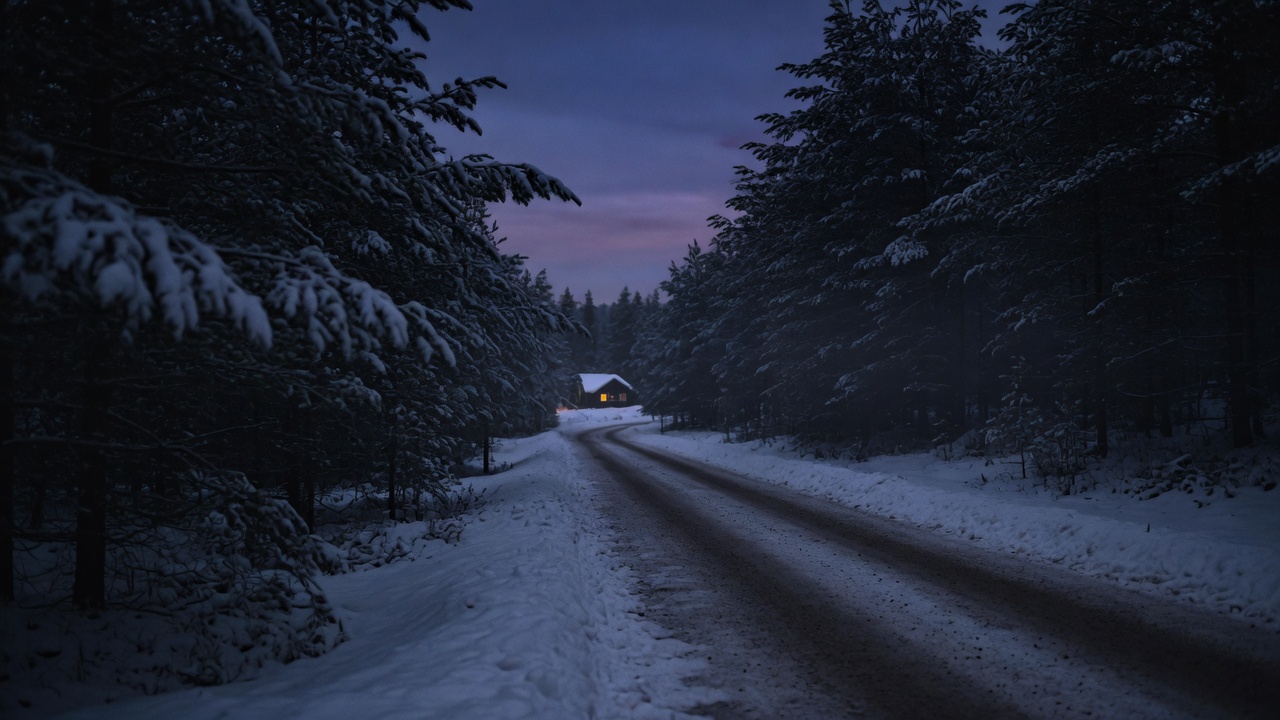
Landscape isn’t backdrop, it’s character. The snow in Nesbø’s The Snowman, the volcanic isolation in Indriðason’s Jar City, the Öland fog in Theorin’s The Darkest Room. Nordic noir uses geography to compress emotional distance. Characters can’t outrun their setting; the setting remembers what they try to forget.
The detective is often the secondary wound. Kurt Wallander’s diabetes and loneliness, Harry Hole’s alcoholism and self-sabotage, Erlendur Sveinsson’s frozen grief, Carl Mørck’s guilt: Nordic investigators frequently mirror the societies they investigate. The case is external; the damage is internal and cumulative across series entries.
Social critique is structural, not decorative. Mankell’s Faceless Killers uses a rural double murder to expose xenophobia. Larsson’s Millennium books attack corporate corruption and violence against women. Giolito’s Quicksand dissects class privilege on Stockholm’s Djursholm. Nordic noir treats crime as symptom, and the murder is the entry point, not the entire diagnosis.
Pacing favors moral weight over velocity; With exceptions. Mankell and Indriðason are deliberate. Nesbø accelerates into horror-thriller set pieces. Läckberg softens the edges for coastal domestic mystery. The subgenre’s range is wider than the “bleak and slow” stereotype suggests, which is why our comparison table includes pace and twist-strength columns.
We scored each book using our v1.0 methodology with adjusted weights for atmosphere craft and lasting influence. Full transparency: affiliate Amazon links in our ranked entries don’t affect placement.
The Ranked List: Why These Ten Lead
1. The Girl with the Dragon Tattoo, Stieg Larsson
Larsson’s 2005 novel sits at #1 because it accomplished what no prior Scandinavian crime novel had achieved at scale: it made international readers demand Nordic noir by name. Disgraced journalist Mikael Blomkvist partners with brilliant, traumatized hacker Lisbeth Salander to investigate the decades-old disappearance of Harriet Vanger on a isolated island owned by Sweden’s industrial elite. The mystery is fair-play and meticulously constructed; the social commentary on misogyny, fascism’s long shadow, and corporate malfeasance is furious.
Salander became an icon. A rare thriller protagonist whose trauma is acknowledged without defining her solely as victim. The novel’s opening financial-journalism chapters test patience, but once the Vanger investigation ignites, momentum rarely falters. For readers entering Nordic noir for the first time, this remains the essential starting point. Pair with our psychological thriller rankings if Salander’s character complexity pulls you toward mind-game suspense beyond procedurals.
2. Faceless Killers: Henning Mankell
Before Larsson’s global tsunami, Mankell’s Kurt Wallander novels established the exportable Nordic template. In Faceless Killers, an elderly couple is murdered in rural Skåne; the wife’s dying word, and “foreign”; Ignites anti-immigrant hysteria before evidence complicates the narrative. Wallander is tired, diabetic, recently divorced, and perpetually disappointed in his society’s capacity for cruelty and stupidity.
I’d put this at #2 on influence and craft rather than raw commercial peak, Mankell proved Scandinavian procedurals could carry European literary ambition while remaining accessible to translation markets. The pacing is measured by modern thriller standards; the payoff is a detective whose humanity deepens across thirteen novels. If you want Nordic noir’s moral foundation before its blockbuster era, start here.
3. The Snowman. Jo Nesbø
Nesbø’s seventh Harry Hole novel is his most internationally famous: and for good reason. A serial killer whose signature is a snowman left outside victims’ homes may have operated undetected for years. Norwegian winter becomes claustrophobic antagonist: white landscapes that erase evidence, darkness that arrives by mid-afternoon, and a detective whose personal chaos mirrors the case’s escalating horror.
The Snowman trades some of Mankell’s sociological patience for set-piece suspense and gothic dread. It ranks below Larsson on cultural watershed influence and below The Redbreast on pure craft ambition, but above both on gateway accessibility for thriller readers who want propulsion with their frost. Content warnings are serious, and graphic violence and disturbing crime scenes. Not for faint-hearted book clubs.
4. Jar City; Arnaldur Indriðason
Iceland’s population is small enough that everyone is theoretically connected, a fact Indriðason weaponizes in Jar City. Detective Erlendur Sveinsson investigates the murder of a lonely old man and uncovers links to a decades-old rape case stored in the nation’s genealogical archives. The mystery is tight; the emotional register is grief that has nowhere to go in a country where silence is cultural default.
Winner of the Glass Key for best Scandinavian crime novel, Jar City represents Icelandic noir’s distinct voice: less gunfire than existential weight, less urban sprawl than compressed history. Erlendur’s family subplots. Especially his damaged relationship with his daughter: add domestic ache. For readers who found Larsson too loud or Nesbø too graphic, Indriðason offers devastating quiet.
5. The Redbreast, and Jo Nesbø
Many Nesbø devotees rank The Redbreast above The Snowman on pure craft, and our scoring agrees on literary merit; #5 versus #3 reflects the international gateway weighting we apply for readers new to the subgenre. Present-day Oslo detective Harry Hole tracks neo-Nazi arms trafficking while parallel chapters follow Norwegian soldiers fighting for the Nazis on the Eastern Front in 1942.
The dual-timeline architecture is Nordic noir at its most ambitious: national history as unresolved crime scene. Nesbø forces readers to confront Norway’s WWII collaboration legacy while delivering a contemporary conspiracy thriller. At 656 pages, it demands commitment. The reward is a finale that converges timelines with genuine moral force rather than gimmickry.
6. Smilla’s Sense of Snow, Peter Høeg
Published in 1992. Before the Larsson wave: Høeg’s novel already contained Nordic noir’s signature fusion of outsider protagonist, landscape expertise, and institutional distrust. Smilla Jaspersen, half-Inuit and living in Copenhagen, investigates the death of a six-year-old boy who fell from a rooftop. Her understanding of snow and ice tells her the official accident ruling is wrong.
Smilla’s Sense of Snow carries literary-fiction prestige without sacrificing thriller momentum, though philosophical digressions in the middle section test readers seeking pure procedural drive. Smilla remains one of the subgenre’s most singular protagonists, and neither detective nor amateur sleuth but expert witness against a world that has never fully accepted her. For historical context on Nordic noir before its global branding, this is required reading.
7. The Keeper of Lost Causes; Jussi Adler-Olsen
Carl Mørck, a Copenhagen detective broken by a shooting incident, is exiled to Department Q, a basement archive of unsolved cases. Where he reopen the five-year-old disappearance of politician Merete Lynggaard. Adler-Olsen blends cold-case procedure with dark Scandinavian humor and a claustrophobic survival plot that became Denmark’s post-Millennium phenomenon.
I’d put this at #7 as the best Danish series launch on this list. The Department Q premise: forgotten cases, forgotten people, a detective society would prefer to forget, and is instantly compelling. Mørck’s partnership with assistant Assad adds warmth without sentimentalizing the violence beneath. For series readers, continue with The Absent One and A Conspiracy of Faith.
8. Quicksand; Malin Persson Giolito
Eighteen-year-old Maja Norberg stands trial for murdering her boyfriend and best friend in the aftermath of a school shooting on Stockholm’s wealthiest island. Giolito reconstructs events through courtroom testimony and fragmented memory, Nordic noir as social autopsy of class privilege, parental absence, and the violence simmering beneath Scandinavian respectability.
Quicksand won Sweden’s Best Crime Novel Award and became a Netflix series because it speaks to contemporary anxieties Mankell’s era approached from different angles. The novel deliberately withholds clean answers, which frustrates readers wanting definitive whodunit resolution. For book clubs willing to debate ambiguity, it’s among the most discussable titles here. Content warnings around school shootings are essential pre-reading context.
9. The Ice Princess. Camilla Läckberg
Writer Erica Falck returns to her hometown Fjällbacka and discovers her childhood friend dead in a frozen bath: apparent suicide that detective Patrik Hedström suspects is murder. Läckberg’s debut opens the long-running Fjällbacka series, pairing West Coast Swedish atmosphere with domestic secrets and a lighter emotional register than Mankell or Larsson.
I’d put this at #9 because accessibility and charm come at the cost of social confrontation, and Läckberg is Nordic noir adjacent rather than the subgenre’s bleakest voice. But for readers who want Scandinavian crime without relentless despair, The Ice Princess is the ideal bridge. The dual-protagonist chemistry between Erica and Patrik sustains a series that has sold millions across Europe.
10. The Darkest Room; Johan Theorin
Joakim and Tilda relocate to Öland’s Kalmar Strait to renovate a lighthouse after family tragedy, but the island’s history of shipwrecks, folklore, and violence closes around them. Theorin’s Öland Quartet opener merges Nordic noir with gothic horror, a direction the subgenre rarely pursues as successfully.
The Darkest Room closes our list because its slow-burn folkloric dread is less representative of mainstream Nordic procedural than the ranked titles above. But atmosphere is among the richest here. Öland’s isolation feels qualitatively different from Reykjavík or Oslo: maritime superstition, lighthouse geometry, the sea as grave. For readers who want Scandinavian crime fiction with ghost-story texture, Theorin is essential.
How to Choose Your Next Nordic Noir
Use this decision path to match mood and experience level:
If you want the definitive international gateway: The Girl with the Dragon Tattoo → continue the Millennium trilogy.
If you want classic police-procedural bleakness: Faceless Killers → continue the Wallander series.
If you want fast-moving serial-killer horror: The Snowman → then The Redbreast for deeper craft.
If you want Icelandic melancholy: Jar City → explore the full Erlendur series.
If you want literary prestige: Smilla’s Sense of Snow → then Larsson for modern parallel.
If you want Danish cold-case wit: The Keeper of Lost Causes → Department Q series.
If you want modern social critique: Quicksand: trial narrative and class commentary.
If you want accessible coastal mystery: The Ice Princess → Fjällbacka series.
If you want gothic island atmosphere: The Darkest Room → Öland Quartet.
| If you want… | Start here | Then try… |
|---|---|---|
| Global phenomenon energy | The Girl with the Dragon Tattoo | Quicksand |
| Classic detective template | Faceless Killers | Jar City |
| Harry Hole suspense | The Snowman | The Redbreast |
| Literary pre-wave prestige | Smilla’s Sense of Snow | Faceless Killers |
| Danish series depth | The Keeper of Lost Causes | The Ice Princess |
| Gentler Scandinavian crime | The Ice Princess | Crime fiction coverage |
| Gothic folklore dread | The Darkest Room | Psychological thrillers |
Honorable Mentions
These excellent Nordic and Scandinavian crime novels fell just outside our top ten, and usually on series-dependency, cross-genre classification, or slightly lower consensus scores; But each belongs on an expanded TBR.
The Laughing Policeman, Maj Sjöwall and Per Wahlöö. The Martin Beck series (1965–1975) essentially invented modern Nordic police procedural fiction. Foundational rather than gateway-accessible for contemporary readers.
The Department of Sensitive Crimes. Alexander McCall Smith. Gentle Swedish cold-case procedural with humor. Softer than noir purists prefer, but delightful for readers easing into Scandinavian crime.
The Hypnotist: Lars Kepler. Joona Linna series opener delivers cinematic serial-killer suspense. fast-moving but slightly less influential than ranked Nesbø or Larsson entries.
Before the Frost, and Henning Mankell. Wallander’s daughter Linda takes center stage. Interesting pivot, but Faceless Killers remains the essential Mankell entry.
The Girl Who Takes an Eye for an Eye; David Lagercrantz. Continuation of the Millennium series after Larsson’s death. Competent for series completists; Larsson’s original trilogy remains the canonical experience.
Nordic Noir vs. Crime Fiction: Where the Lines Blur
Several titles on this list also function as crime fiction broadly, and that overlap is intentional. Nordic noir is a flavor within Scandinavian crime, not a sealed border. Camilla Läckberg’s Fjällbacka novels lean coastal domestic mystery. Nesbø’s Harry Hole series borrows serial-killer horror architecture. Giolito’s Quicksand edges toward courtroom psychological suspense.
If your appetite extends beyond Scandinavian borders, explore our Top Criminal Thriller Books of 2026 for procedural and investigation-forward picks from the current year. For mind-games suspense that Scandinavian authors occasionally touch without dwelling there, our best psychological thrillers hub covers a wider emotional range. Legal-thriller readers who enjoyed Quicksand’s courtroom architecture should browse our legal thriller rankings.
Browse additional titles by tag on our dedicated Nordic noir subgenre page.
Content Warnings and Reader Sensitivities
Collectively, these ten novels feature murder, sexual violence, child victims, school shootings, neo-Nazism, substance abuse, grief, and institutional failure. Larsson’s Millennium books and Nesbø’s The Snowman are among the most graphic. Quicksand centers a school shooting and trial trauma. Jar City and Faceless Killers address sexual assault and xenophobia with unflinching directness. The Darkest Room explores child death and psychological horror.
Always check individual content warnings in our ranked entries before gifting or assigning to groups. Most titles here are firmly adult-oriented.
Related Rankings on ThrillerRanked
Dig deeper by subgenre, year, and theme:
- Nordic Noir subgenre hub. Explore by trope and mood
- Best Thriller Novels of 2026: current-year standout picks
- Top Criminal Thriller Books of 2026, and procedural and investigation-forward titles
- Best Psychological Thrillers; Evergreen mind-game essentials
- Best Legal Thriller Books, courtroom suspense for Quicksand fans
- Best Espionage Thrillers. Cold War tradecraft and institutional paranoia
- How We Rank: full methodology transparency
Conclusion
The best Nordic noir books prove that cold weather and social democracy don’t equal comfort, and that Scandinavian societies harbor the same violence, corruption, and silence as anywhere else, filtered through landscapes that make isolation visceral. Stieg Larsson and Henning Mankell built the international template. Arnaldur Indriðason and Peter Høeg deepened the literary and atmospheric range. Jo Nesbø, Jussi Adler-Olsen, and Camilla Läckberg expanded the form into horror, cold-case wit, and coastal accessibility. Malin Persson Giolito and Johan Theorin push Nordic noir into contemporary trial fiction and gothic folklore.
Use the comparison table for pace and atmosphere decisions, match your mood to our decision guide, and grab copies via the Amazon links in each ranked entry. Whether you start with Larsson’s phenomenon or Mankell’s foundational Wallander, you’re reading the novels that made Scandinavian crime fiction a pillar of global thriller culture.
Which Nordic noir novel are you picking up first? Contact us if we missed a title that deserves consideration in a future update.
This article was researched using aggregated public data from Goodreads, Kirkus Reviews, CrimeReads, The Guardian, and Glass Key Award coverage as of July 3, 2026. Rankings reflect our published methodology and editorial synthesis; Not pay-to-play placement.