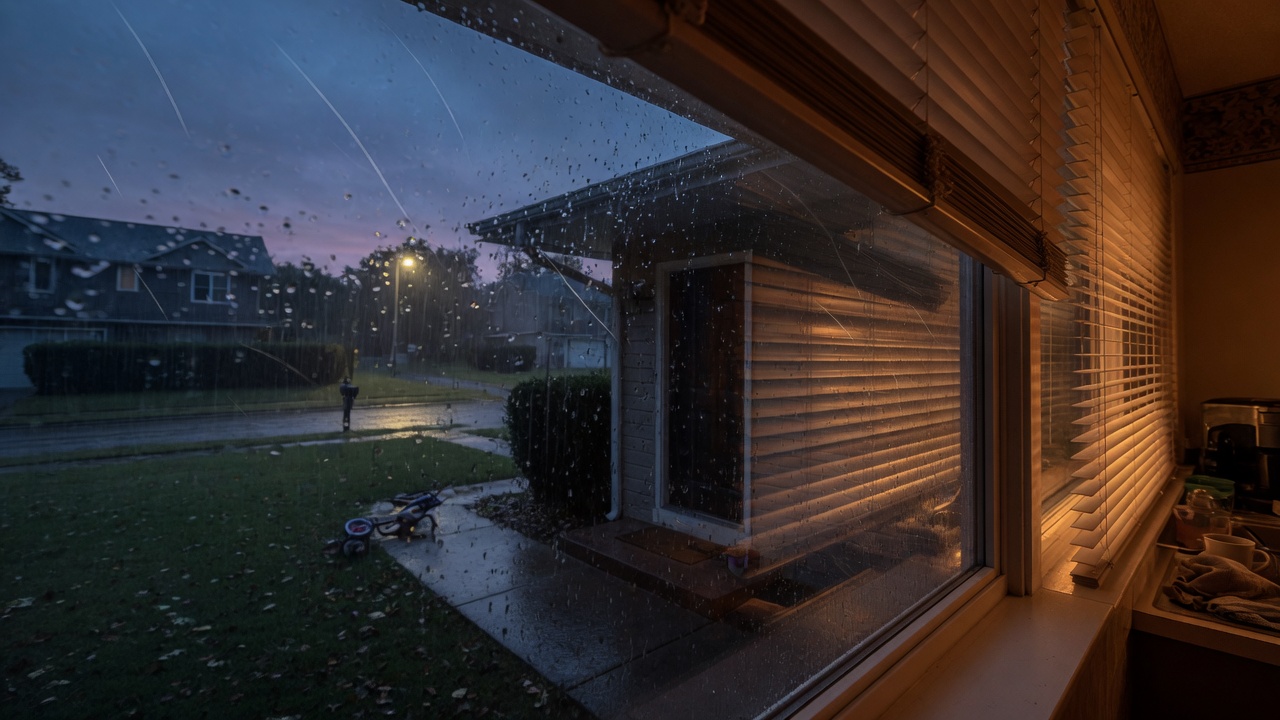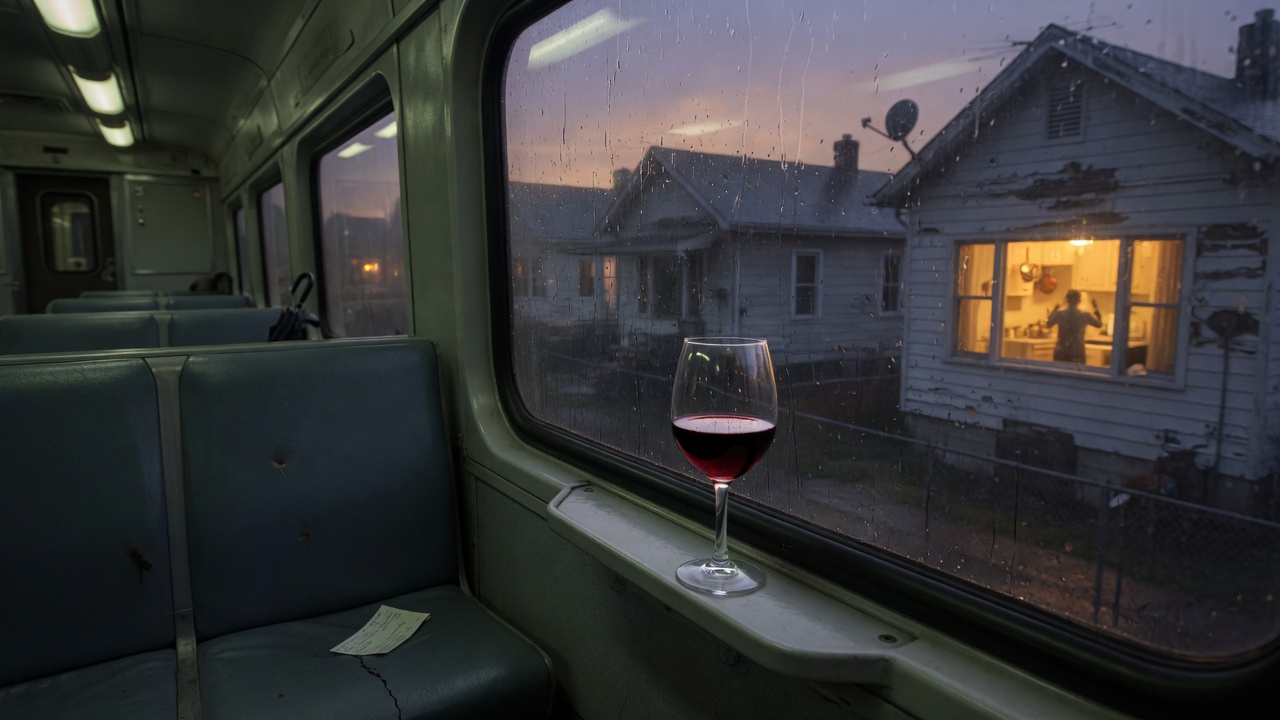
Hey, T.H. here. I still think about Rachel on that London train, half drunk and sure she saw a minute she can’t prove. If that book got under your skin, y’all are in the right pile.
Paula Hawkins didn’t invent the unreliable narrator. She did something meaner with it. In The Girl on the Train (Riverhead, January 2015), Rachel Watson rides into London pretending she still has the job she already lost. From the window she watches a couple she nicknames Jess and Jason. Then she sees something that doesn’t fit, blacks out the night Megan Hipwell disappears, and tries to help an investigation that has every reason not to trust her. Kirkus put the novel on its best books of 2015. It opened at number one on the New York Times fiction list and held the spot for 13 weeks. The 2016 film put Emily Blunt in Rachel’s coat. The audiobook, three narrators, won the Audie Award for Audiobook of the Year.
Into the Water (2017), A Slow Fire Burning (2021), and The Blue Hour (2024) are moodier than the debut. They still ask what happens when the person who saw it is the last person anyone will believe.
This list isn’t “any twisty domestic thriller.” I scored twelve readalikes for Hawkins DNA first: a narrator whose memory is compromised, a witness the room won’t credit, and a domestic frame that feels ordinary until it isn’t. Quality on our v1.0 weights counts, and so does whether a Girl on the Train reader can finish it in a weekend. Hawkins’s own novels stay off the list. Gone Girl is here. It isn’t number one, and I’ll tell you why.
If you only grab one: The Woman in the Window. Same wine. Different window.
What Paula Hawkins readers actually want
People who search “books like Paula Hawkins” usually mean The Girl on the Train. A clever twist isn’t enough. They want the shame of being a bad witness to their own night.
A mind you can’t use as evidence. Rachel drinks. She loses hours. She names strangers because the story in her head is kinder than her life. The best matches here use alcohol, amnesia, a coma, or a narrator who warns you that she lies.
A fixed seat. A train window. A Harlem townhouse. Binoculars on a lake porch. You’re stuck with one pair of eyes, and those eyes are a mess. Let the book out into a detective’s clean notes too early and the feeling drops.
The penalty for telling it. Police, husbands, and neighbors treat the narrator as a problem to manage. I’d rather a flawed witness than a brilliant detective in this lane.
More than one woman, and none of them clean. Rachel, Megan, and Anna can’t share a suburb. Several titles below split the story the same way.
Hawkins DNA, in one table
| Element | What Hawkins does | Closest matches here |
|---|---|---|
| Compromised memory | The narrator loses the night | Before I Go to Sleep, The Breakdown, Listen for the Lie |
| A fixed view | Looking is the plot | The Woman in the Window, The House Across the Lake |
| Not believed | The room has already decided | The Woman in Cabin 10, The Push |
| Domestic frame | Ordinary rooms, ugly facts | Sometimes I Lie, None of This Is True |
| Several women | Incompatible accounts | The Girl Before, Gone Girl |
The math lives on How We Rank: critical reception 25%, reader consensus 25%, craft and structure 20%, originality and impact 15%, accessibility 15%. For this guide, Hawkins DNA is 40% of the score, that v1.0 quality number is 30%, and weekend readability is 30%. A brilliant book with the wrong engine can land below a closer match. That’s on purpose.
Witnesses nobody believes
These five are the core. Start here if Rachel’s missing hours are the part you can’t shake.
The Woman in the Window (#1) is the closest machine I know. A.J. Finn’s 2018 debut (William Morrow, 448 pages) keeps Dr. Anna Fox in a Harlem townhouse she hasn’t left in months. Merlot, pills, old noir, a new family across the street. Kirkus described the days as drinking and spying, then twist after twist. It hit number one on the New York Times list. The prose is pulpier than Hawkins, and the Hitchcock nods are loud. I don’t care. Anna isn’t Rachel. She’s a doctor stuck indoors. The feeling is the same: a woman at the glass, a life that looks better than hers, and a night that won’t stay put.
Before I Go to Sleep (#2) got to the memory problem earlier, and the writing is better than the gimmick sounds. S.J. Watson’s 2011 debut (Harper, 368 pages) gives Christine Lucas a cruel rule. Sleep erases the day. She wakes beside a husband she doesn’t recognize. A doctor she isn’t supposed to see tells her to keep a journal. Kirkus called the voice pitch-perfect. The book won the Crime Writers’ Association New Blood Dagger. British, domestic, paranoid in a quiet house rather than on a train. The repetition will annoy you until it doesn’t. There’s no deck to watch. There’s only tomorrow morning, blank again.
Listen for the Lie (#3) is what I hand people who say Hawkins feels stuck in 2015. Amy Tintera’s Lucy Chase goes back to Plumpton, Texas, for her grandmother’s birthday. The town already decided she killed her best friend, Savvy, five years ago. Lucy was found covered in blood and still can’t remember the night. A podcast shows up with a microphone. Kirkus called it smart and fast. Celadon published it in March 2024, 336 pages. The true-crime frame is newer than Hawkins. The engine is hers. I live in Texas. A courthouse-square rumor that never dies isn’t a metaphor to me.
Sometimes I Lie (#4) opens with a confession and dares you to use it. Alice Feeney’s debut hit the US from Flatiron in 2018, after a 2017 UK edition, at 272 pages. Amber Reynolds is in a coma. She can hear the room. She can’t answer. She also tells you she lies. Kirkus said the plot piles on more than it can hold: coma, diary, family rot. Fair knock. For “don’t trust this voice,” Feeney is playing Hawkins’s sport, and she’s fast. Sunday book, Monday argument. That’s a compliment.
The Breakdown (#5) is the rainy-night cousin. B.A. Paris (St. Martin’s, 2017, 336 pages) sends Cass Anderson down a wooded road she was told to avoid. A woman sits in a stopped car. Later that woman is dead, and Cass starts losing ordinary facts: the alarm code, the pills, the phone that won’t stop. Kirkus found it paranoid and a little over-tricked. I’d still hand it to anyone who loved Rachel’s missing hours. The gaslighting is the plot. The last stretch explains more than it needs to. You’ll finish it anyway.
When the story itself is the lie
Hawkins uses three narrators who can’t share a suburb. These four do that job with a diary, a podcast, a ship, and a woman who won’t speak.
Gone Girl (#6) is the book every other list puts first. Gillian Flynn’s 2012 novel (432 pages) is a better book than most of the titles above it. I’m not ranking it sixth because it’s weaker. I’m ranking it sixth because the trick is different. Amy’s diary is a performance. Rachel’s problem is perception: she might be wrong about what she saw. Amy’s problem is authorship: she’s writing the marriage she wants the world to read. If you found Hawkins first and you haven’t read Flynn, read this next. If you want another Rachel, this isn’t her. The marriage-thriller path is 15 Books Like Gone Girl.
None of This Is True (#7) asks who gets to tell a life. Lisa Jewell’s 2023 novel (384 pages) pairs podcaster Alix Summer with Josie Fair, a woman who shares her birthday and wants to be the subject. One of them is building a story. Maybe both are. Less blackout, more interview-as-weapon. If you liked having three women tell three incompatible versions of the same streets, you’ll feel at home. It’s one of the stronger audiobooks here. The family material runs darker than the birthday-twin hook. Check the warnings before you gift it.
The Woman in Cabin 10 (#8) traps the witness on a boat. Ruth Ware’s 2016 thriller (340 pages) gives journalist Lo Blacklock a luxury cruise, a bad night, and a woman over the side. The ship says that woman was never aboard. Lo has been drinking, so she’s easy to dismiss. Competence doesn’t save you if the room already decided you’re shaky. The closed setting does some of the train’s work, minus the suburbs. This one is here for the “I saw it” panic.
The Silent Patient (#9) swaps the blackout for a locked mouth. Alex Michaelides’s 2019 novel (336 pages) starts after Alicia Berenson shoots her husband and stops speaking. Therapist Theo Faber wants the story. A journal does some of the talking. The crime is already over when you arrive, so it’s a therapy-room puzzle more than a voyeur book. Highest reader score on this list. The overlap is belief: a woman the public already sentenced, and a man who thinks he can read her. Your group chat will spoil it if you wait.
If you want the feeling, and can live with a swerve
I kept the last three because each one matches a piece of Hawkins cleanly. I’d still warn you in the aisle.
The Push (#10) is about who gets believed inside a family. Ashley Audrain’s 2021 novel (320 pages) follows Blythe, a new mother who doesn’t feel what she was promised and who becomes afraid of her own child. The book looks back at her mother and grandmother. No train. No blackout. Same question, quieter room: when a woman says the house is wrong, who treats her as a witness? Sharper prose than the binge titles. The child-harm material is the center, not a side note. Skip it if that’s a stop. You won’t miss a puzzle. You’ll miss a different kind of dread.
The House Across the Lake (#11) is the binoculars version. Riley Sager’s 2022 novel (Dutton, 368 pages) parks widowed actress Casey Fletcher at a Vermont lake house with bourbon and a view of the glass house opposite. She watches a couple, pulls one of them out of the water, and then that woman vanishes. Casey’s drinking makes her a bad witness on purpose. I rank it down here because the back third leaves the grounded lane Hawkins stays in. Great weekend if you like a wilder ending. If you want the doubt to stay human, stop at number one.
The Girl Before (#12) is the London control experiment. J.P. Delaney’s 2017 novel (352 pages) puts Emma, then Jane, in the same severe house under an architect’s rules. Their accounts don’t line up because the house, and the man who built it, keep editing the terms. Less memory loss, more identity under pressure. Right if Into the Water and The Blue Hour are your Hawkins novels. Wrong if you only want Rachel’s hangover. The parallel lives are clever and, on some pages, a little neat.
How I’d pick, if I were standing in the aisle
| If you want this | Start here | Then try |
|---|---|---|
| Closest to Rachel | The Woman in the Window | The House Across the Lake |
| Memory you can’t trust | Before I Go to Sleep | The Breakdown |
| A recent book | Listen for the Lie | None of This Is True |
| The famous cousin | Gone Girl | The Silent Patient |
| Someone who says she lies | Sometimes I Lie | The Woman in Cabin 10 |
| Quieter and sharper | The Push | The Girl Before |
Content warnings. Alcoholism, gaslighting, domestic abuse, murder, sexual violence, child harm, mental health crises. I’d flag Before I Go to Sleep, The Breakdown, None of This Is True, and The Push before a casual recommendation. Listen for the Lie and The Woman in the Window are easier doors. Easier doesn’t mean light.
Audiobooks. The 2016 Audie wasn’t an accident. A voice has to sell you a memory you aren’t sure you should buy. None of This Is True, The Woman in the Window, and Before I Go to Sleep all gain something in audio. Listen for the Lie was built with a podcast inside it.
If y’all only have a weekend, don’t be noble. Take Sometimes I Lie or The Woman in Cabin 10. Save Gone Girl and The Push for a week when you can sit with them.
Where to go next on ThrillerRanked
The psychological thriller hub and the domestic suspense hub are the shelves these books live on.
For the marriage-war side of the same decade, 15 Books Like Gone Girl ranks the diary trick and the toxic couple. Overlap is intentional. Flynn asks who’s writing the story. Hawkins asks whether the witness can trust her own eyes.
For the wider canon on full v1.0 weights, not readalike DNA, see Best Domestic Suspense Books. After these twelve, the long shelf is Best Psychological Thrillers.
Start with the window
I’d put The Woman in the Window in your hands first. Then Before I Go to Sleep if you want the craft, and Listen for the Lie if you want a book that feels like now. Gone Girl is the best novel in the neighborhood. It isn’t the same house.
Hawkins’s trick still works because most of us have talked ourselves into a story about strangers. The scary part is the hour you can’t account for, and the look on someone’s face when you try.
Miss a readalike? Tell me. I update these when a new narrator lies well enough to earn the spot.
Sources: Kirkus Reviews on The Girl on the Train, The Woman in the Window, Before I Go to Sleep, Sometimes I Lie, The Breakdown, and Listen for the Lie; Wikipedia on the novel’s bestseller run and Audie Award. Rankings use our published readalike method. Nobody paid for a slot.